A curated collection of close-up images of high-altitude jet aircraft, each accompanied by a brief insight into the characteristics and formation of their contrails.
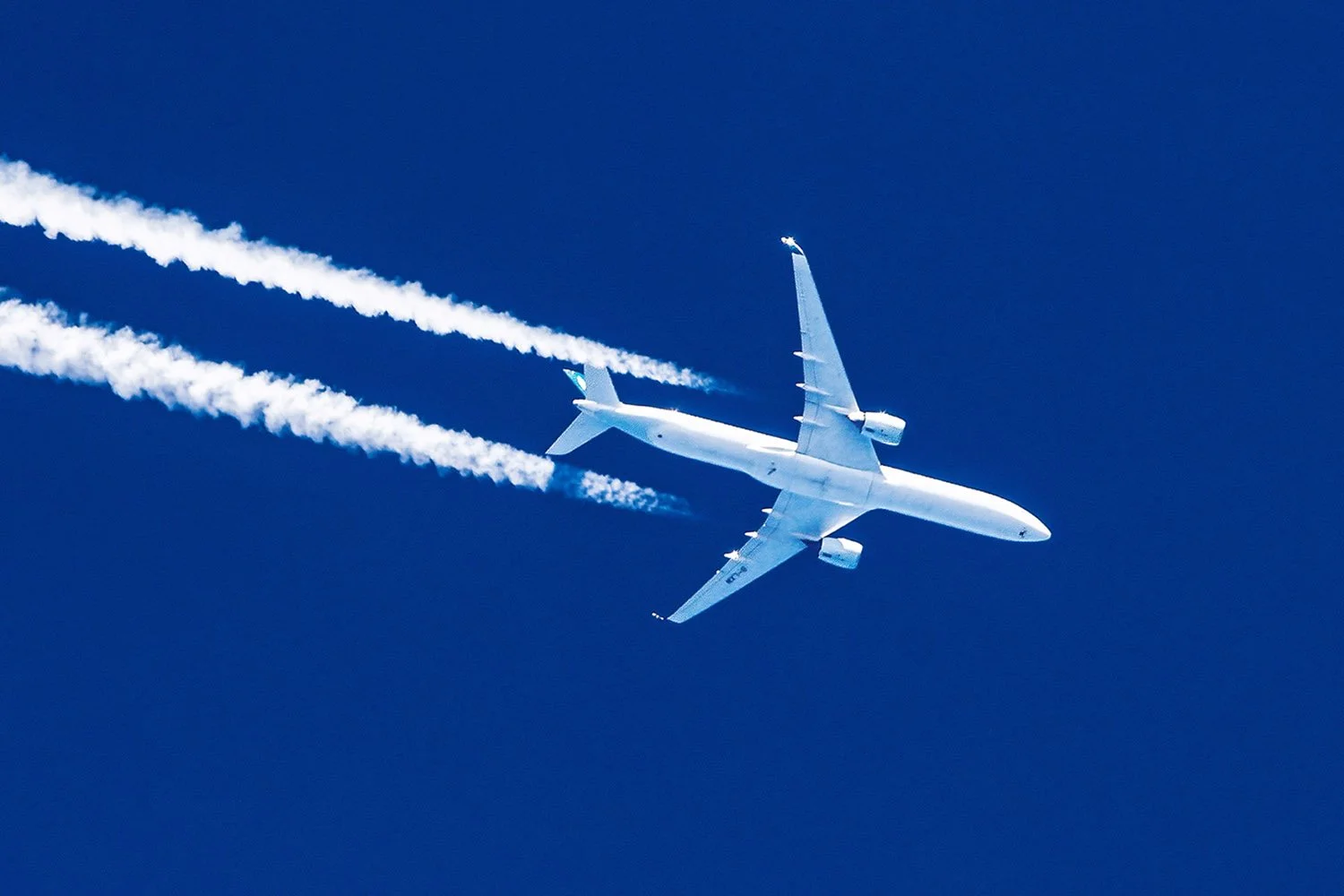
AIRBUS A350 - Flight: CX840; Cathay Pacific; Hong Kong to New York; Airbus A350-1041; Registration: B-LXM; AGL 37,000 feet; Ground speed: 588 knots.
The aircraft produces relatively thin but well-defined, slightly fragmented contrails, indicating cold (around −56 °C) and moderately humid upper-atmosphere conditions where ice crystals form and persist briefly, maintaining distinct engine-separated trails before gradually dissipating.
Photographed from the Oak Bay Marina, Victoria, BC, Canada, 48.424° N, −123.303° W. September 16, 2021.
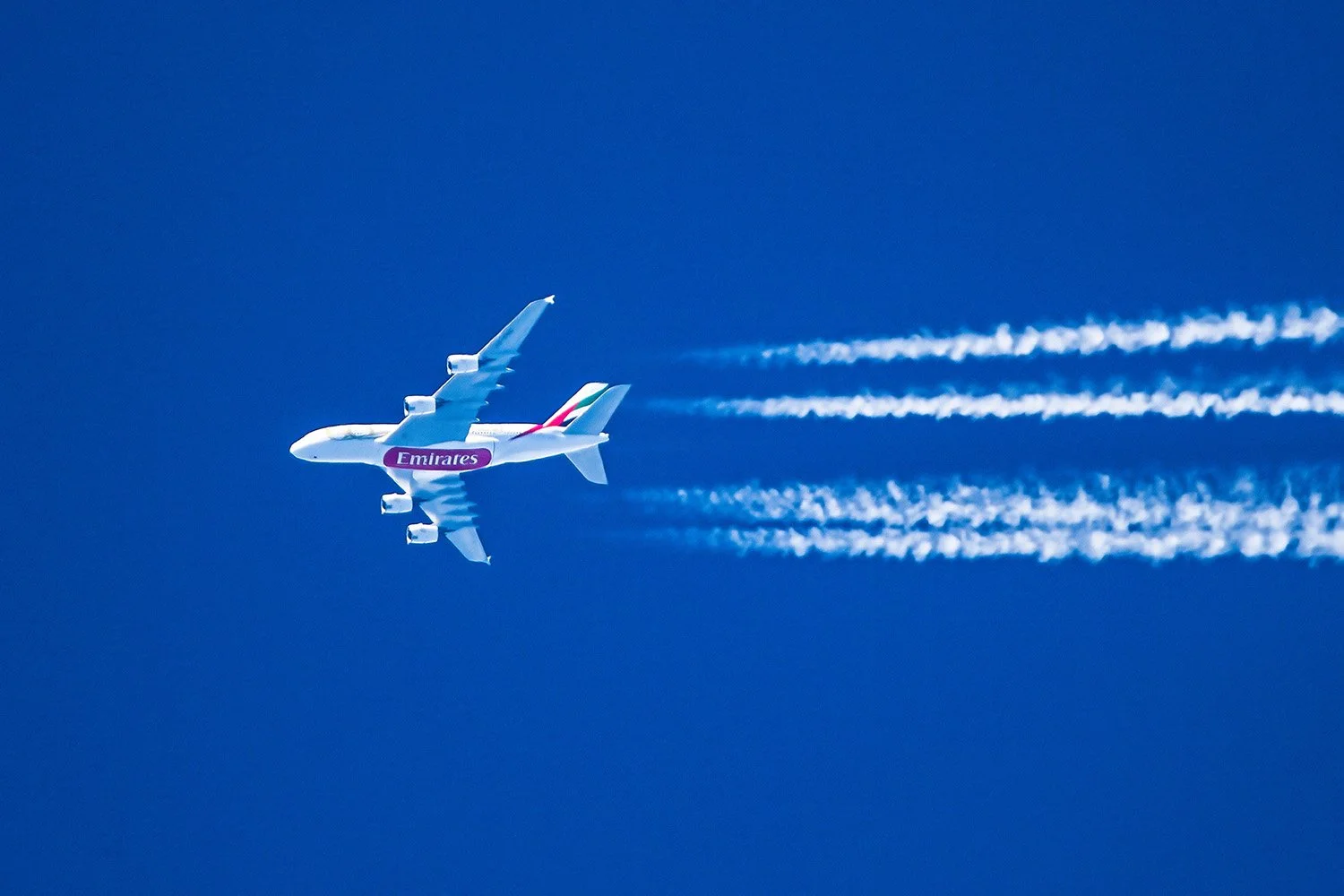
AIRBUS A380 - Flight: EK225; Emirates (Year of the Fiftieth Livery); Dubai to San Francisco; Airbus A380-842; Registration: A6-EVG; AGL 41,000 feet; Ground speed: 492 knots.
The A380 produces thick, well-defined, and highly persistent contrails, indicating very cold (around −60 °C) and moist upper-atmosphere conditions where ice crystals form readily and remain stable, with distinct, closely spaced trails from each engine that gradually spread and merge into broader, denser cloud-like formations.
Photographed from the Oak Bay Marina, Victoria, BC, Canada, 48.424° N, −123.303° W. August 3, 2022.
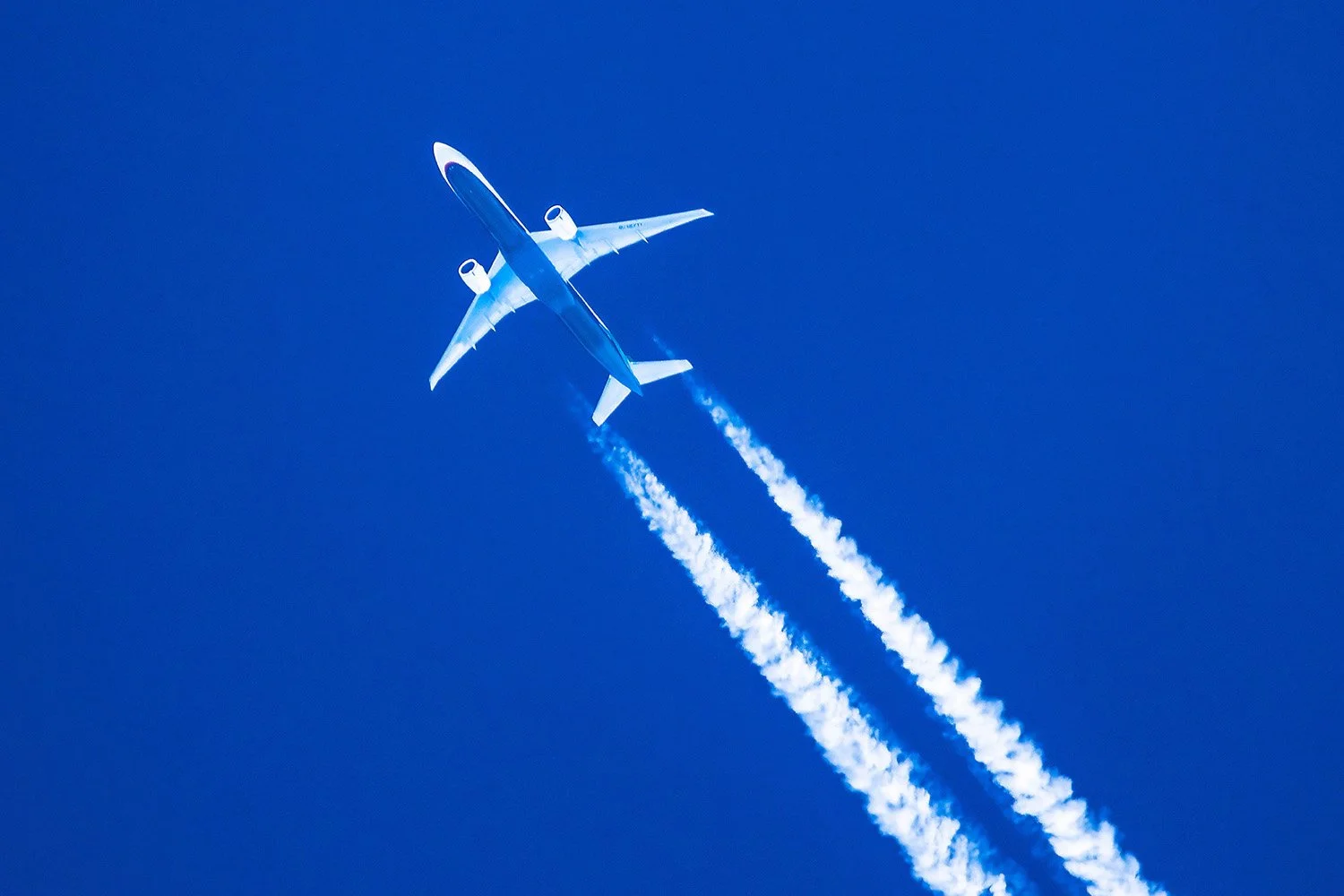
BOEING 777 - Flight: BR1056; EVA Air; Taipei to Chicago; Boeing 777-35E (ER); Registration: B-16711; AGL 37,000 feet; Ground speed: 547 knots.
The contrails are persistent ice-crystal clouds formed by the rapid cooling and freezing of engine exhaust water vapor in cold, ice-supersaturated air at cruise altitude. Their clean, parallel structure reflects stable atmospheric conditions and the aerodynamic wake of the Boeing 777 at high altitude.
Photographed from the Oak Bay Marina, Victoria, BC, Canada, 48.424° N, −123.303° W. July 23, 2021.
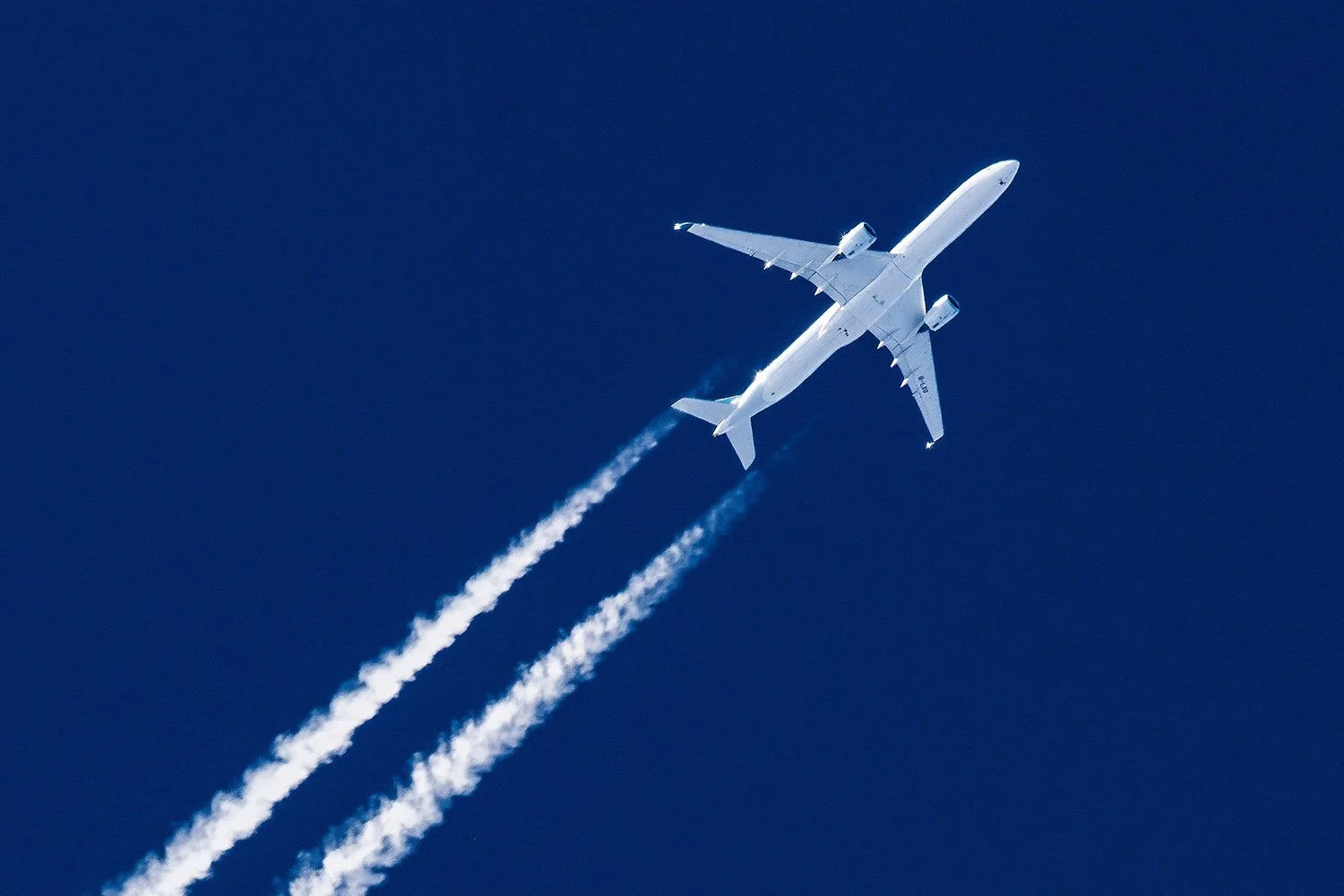
AIRBUS A350 - Flight: Hong Kong to New York; Cathay Pacific; Flight: CX846; Airbus A350-1041; Registration: B-LXG; AGL 37,000 feet; Ground speed: 554 knots.
The contrails behind this Airbus A350 at 37,000 feet are bright, persistent ice-crystal trails, formed as engine exhaust moisture freezes in cold ambient temperatures around −50 °C to −60 °C. Their dense, continuous appearance indicates ice-supersaturated air, allowing them to remain well-defined and gradually spread into thin cirrus-like clouds.
Photographed from the Oak Bay Marina, Victoria, BC, Canada, 48.424° N, −123.303° W. May 4, 2021.
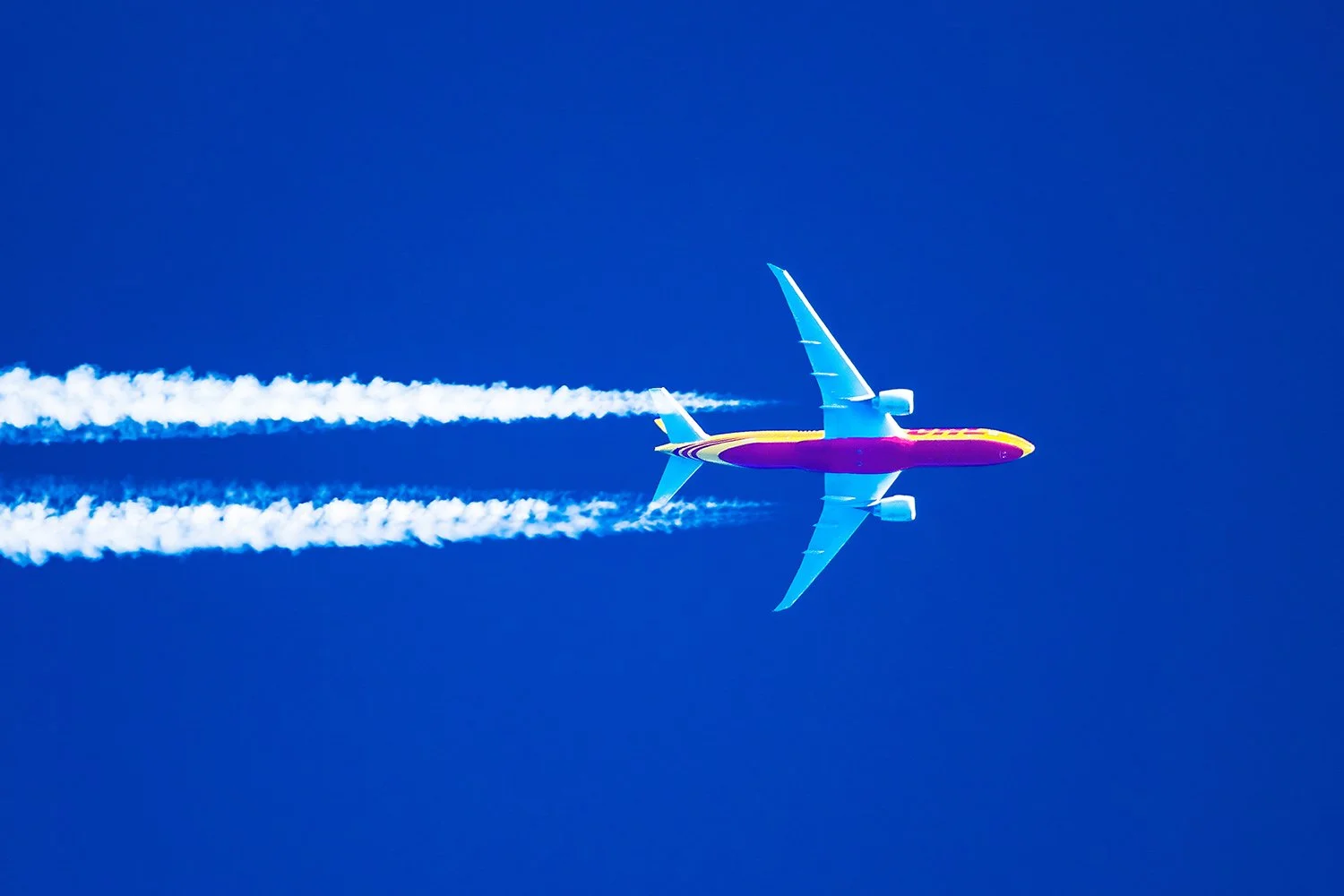
BOEING 777 - Flight: DO518; DHL (Operated by AeroLogic); Seoul to Cincinnati; Boeing 777-F; Registration: D-AALM; AGL 35,000 feet; Ground speed: 543 knots.
These contrails are long-lasting ice-crystal clouds formed by engine exhaust interacting with very cold (−45 to −55 °C), humid air, initially structured by aircraft aerodynamics and gradually dispersed by turbulence and ambient atmospheric conditions.
Photographed from the Oak Bay Marina, Victoria, BC, Canada, 48.424° N, −123.303° W. September 16, 2021.

BOEING 777 - Flight: NH12; All Nippon Airways; Tokyo to Chicago; Boeing 777-300 (ER); Registration: JA795A; AGL 35,000 feet; Ground speed: 533 knots.
The contrails behind this Boeing 777-300ER are persistent ice-crystal trails, formed as engine exhaust moisture freezes in cold ambient temperatures around −45 °C to −55 °C. Their bright, continuous structure indicates ice-supersaturated air, allowing them to remain visible and gradually spread into thin cirrus-like clouds.
Photographed from the Oak Bay Marina, Victoria, BC, Canada, 48.424° N, −123.303° W. October 1, 2021.
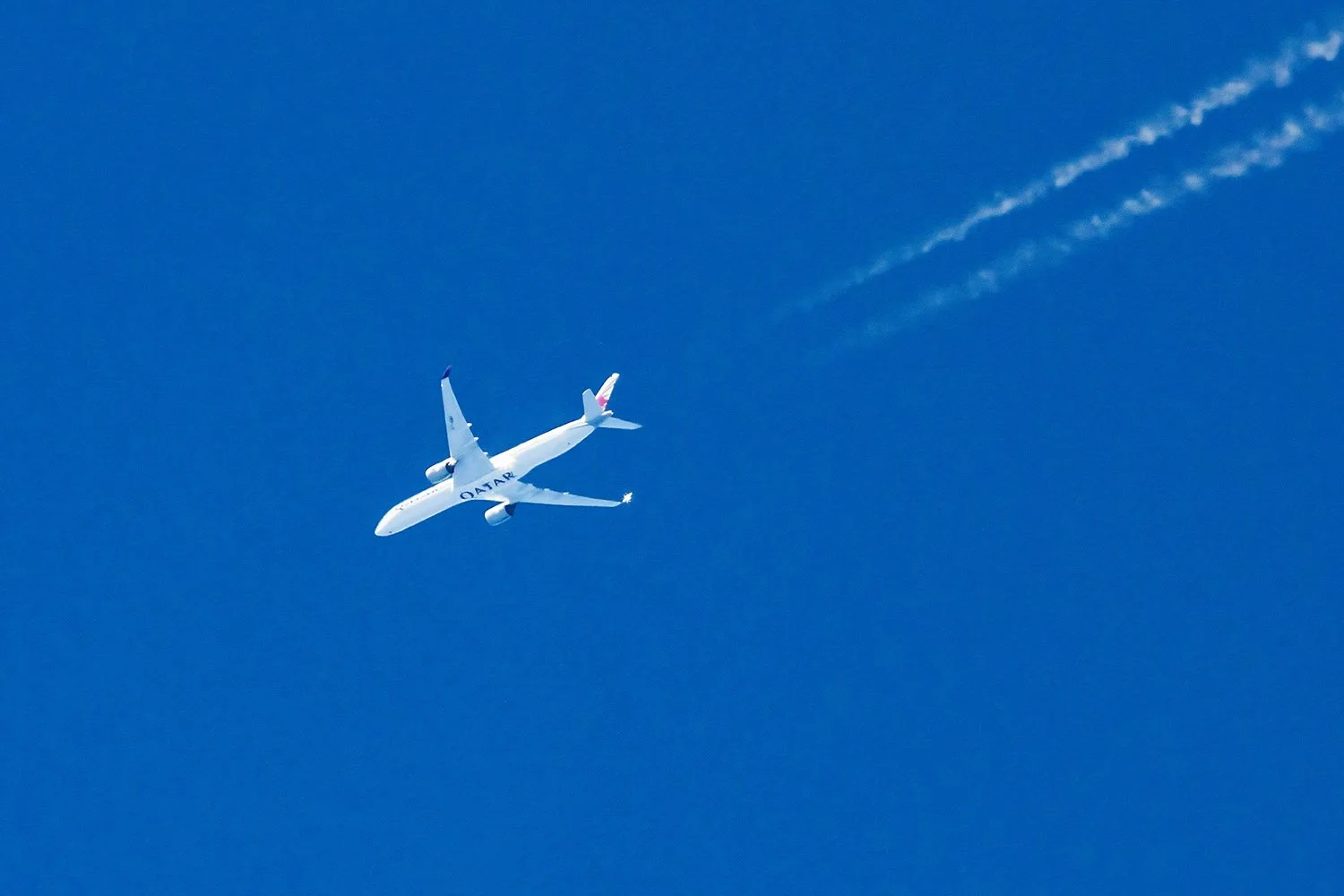
AIRBUS A350 - Flight: QR737; Qatar Airways; Doha to San Francisco; Airbus A350-1041; Registration: A7-ANN; AGL 39,000 feet; Ground speed: 457 knots.
These contrails appear thin, intermittent, and dissipating, indicating marginal contrail formation conditions in the upper atmosphere. At this higher cruise altitude, ambient temperatures are typically around −55 °C to −65 °C, cold enough for contrails to form. However, contrail persistence depends heavily on humidity.
Photographed from the Oak Bay Marina, Victoria, BC, Canada, 48.424° N, −123.303° W. July 29, 2021.
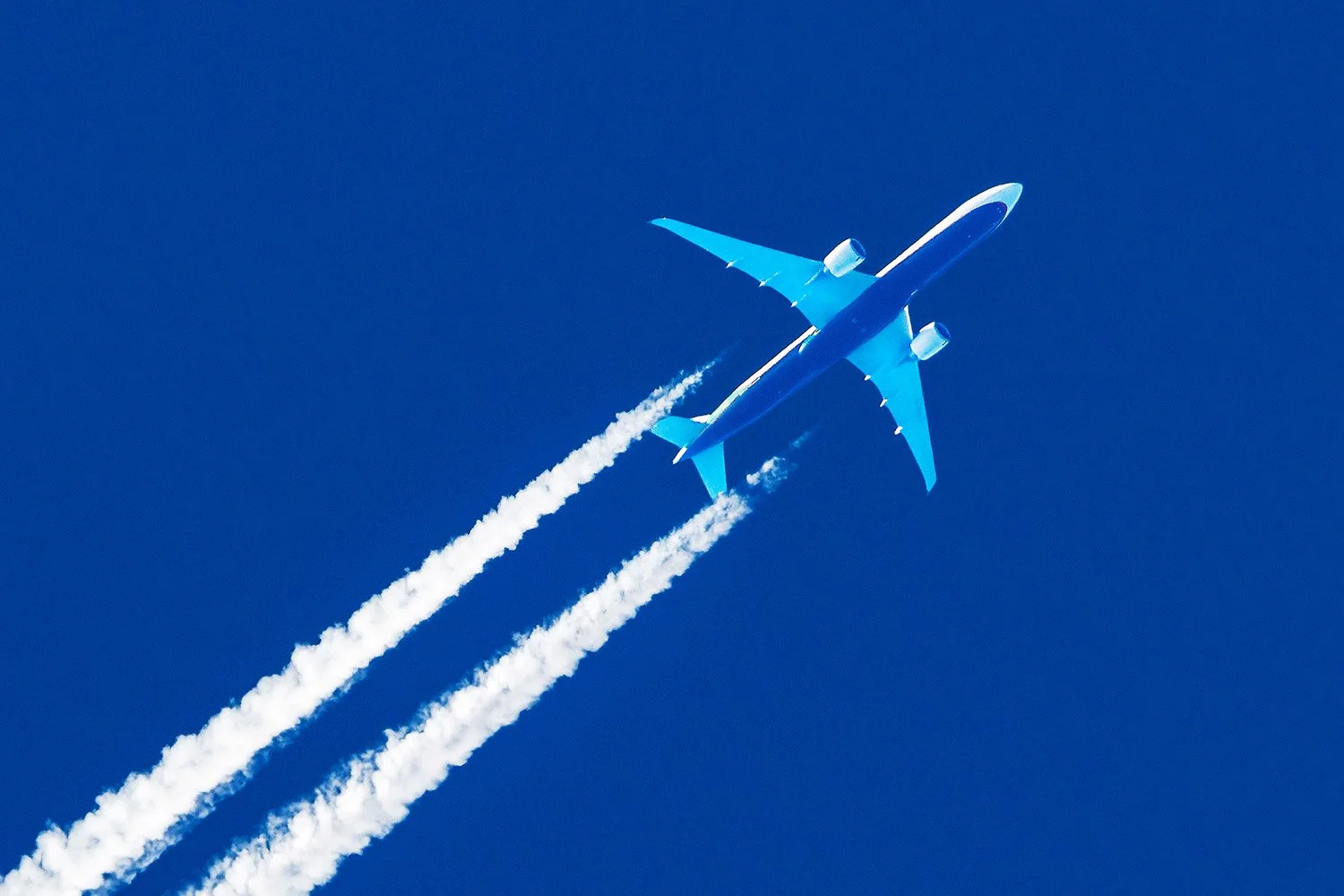
BOEING 777 - Flight: BR640; EVA Air; Taipei to New York; Boeing 777-35E (ER); AGL 37,000 feet; Ground speed: 485 knots.
The contrails behind this Boeing 777 are dense, persistent ice-crystal trails formed as engine exhaust water vapor rapidly freezes in ambient temperatures around −50 °C to −60 °C. Their bright, continuous appearance indicates ice-supersaturated air, allowing the trails to remain stable and gradually spread under the influence of wake turbulence and atmospheric mixing.
Photographed from the Oak Bay Marina, Victoria, BC, Canada, 48.424° N, −123.303° W. September 2, 2021.
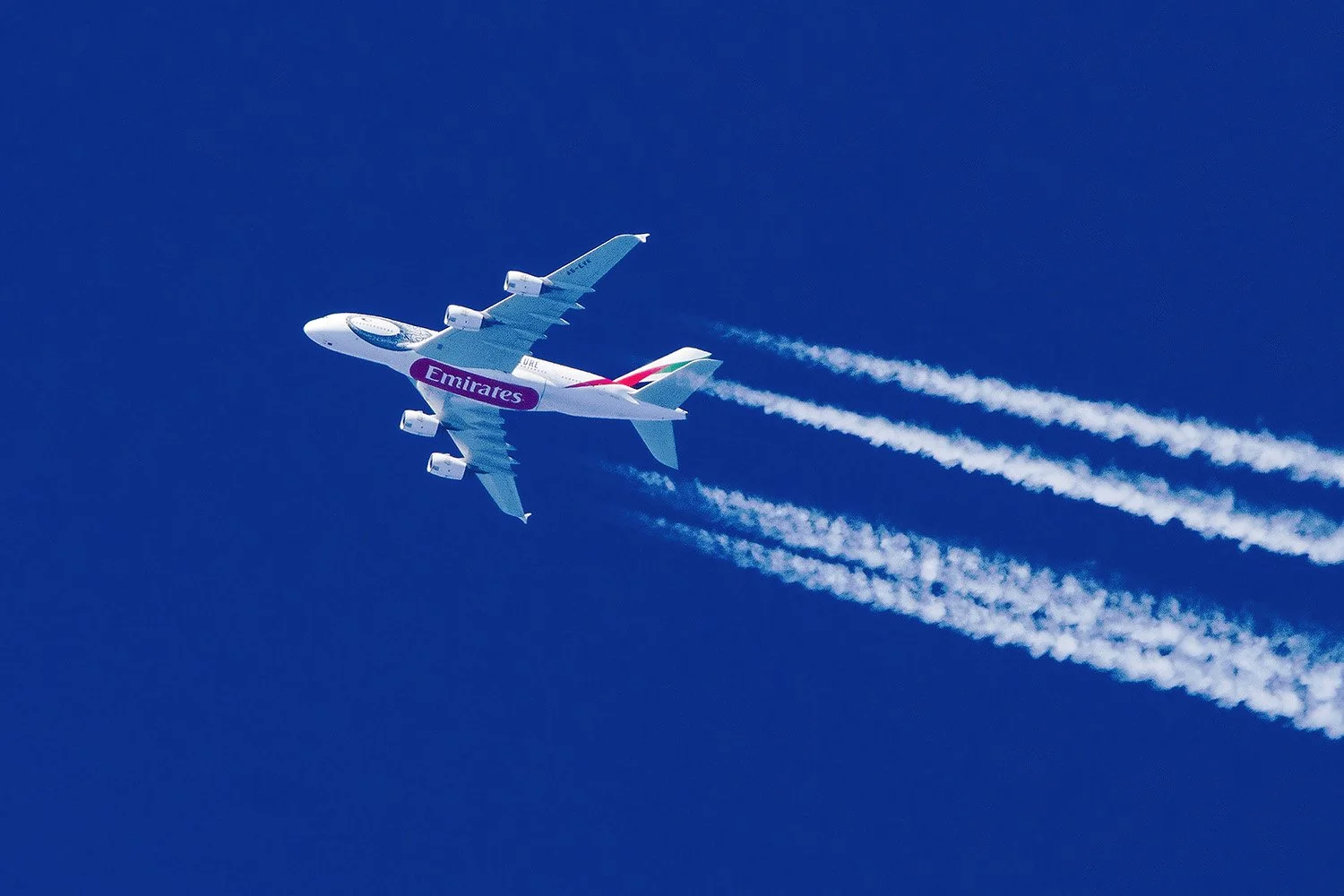
AIRBUS A380 - Flight: EK225; Emirates (Journey to the Future Livery); Dubai to San Francisco; Airbus A380-842; Registration: A6-EVX; AGL 39,000 feet; Ground speed: 483 knots.
The contrails behind this Airbus A380 are bright, persistent ice-crystal trails formed as engine exhaust moisture freezes in very cold air, typically around −55 °C to −65 °C. Their strong, continuous appearance and gradual spreading indicate ice-supersaturated conditions, allowing the trails to remain visible and evolve into thin cirrus-like clouds.
Photographed from the Oak Bay Marina, Victoria, BC, Canada, 48.424° N, −123.303° W. March 22, 2023.
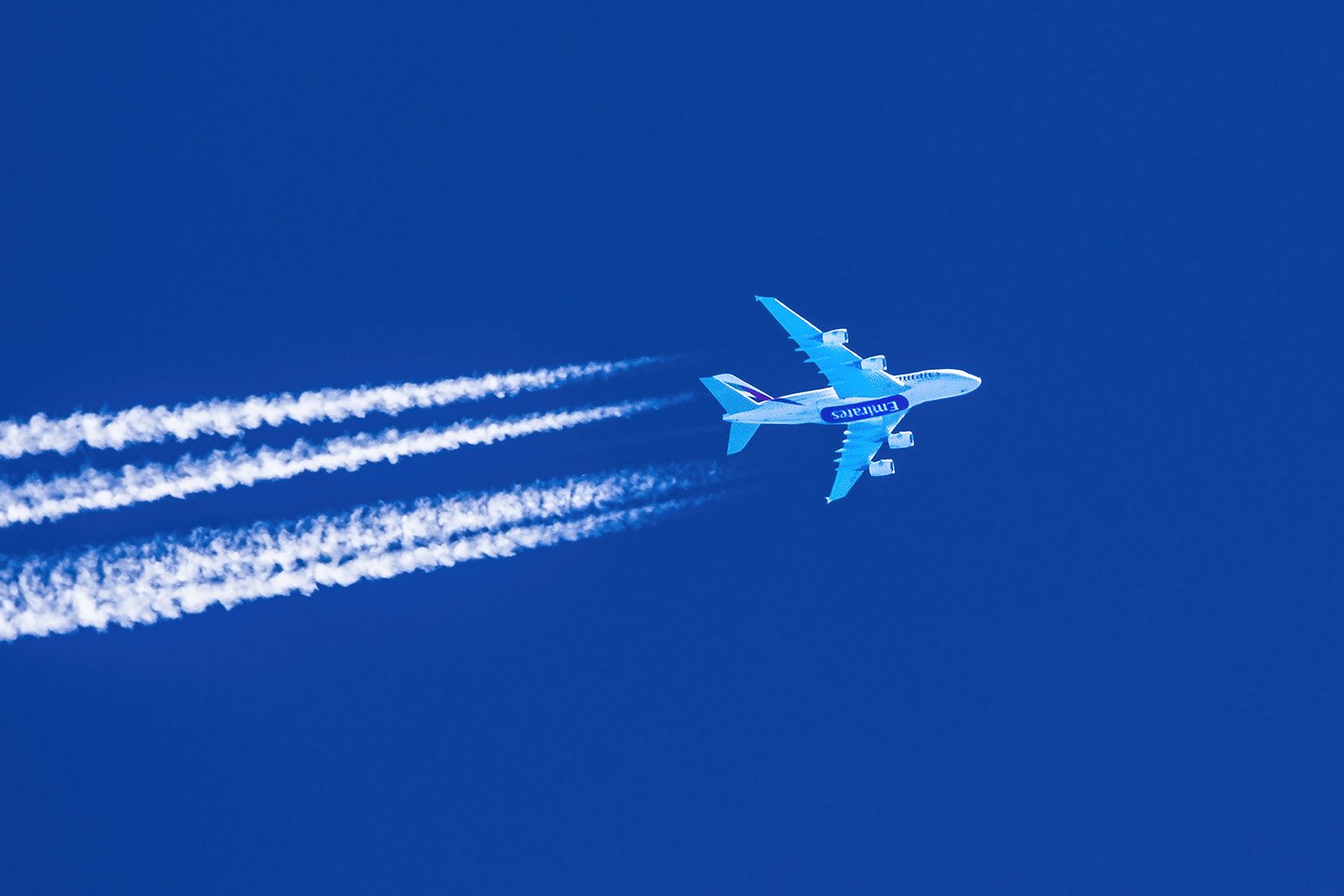
AIRBUS A380 - Flight: UAE26VE; Emirates; Dubai to San Francisco; Airbus A380-861; Registration: A6-EUK; AGL 41,000 feet; Ground speed: 447 knots.
The contrails are persistent ice-crystal trails formed in extremely cold air, typically around −60 °C to −70 °C, where engine exhaust moisture rapidly freezes. Their bright, continuous structure and gradual spreading indicate ice-supersaturated conditions, allowing the trails to remain visible and slowly diffuse into thin cirrus clouds.
Photographed from the Oak Bay Marina, Victoria, BC, Canada, 48.424° N, −123.303° W. July 12, 2022.
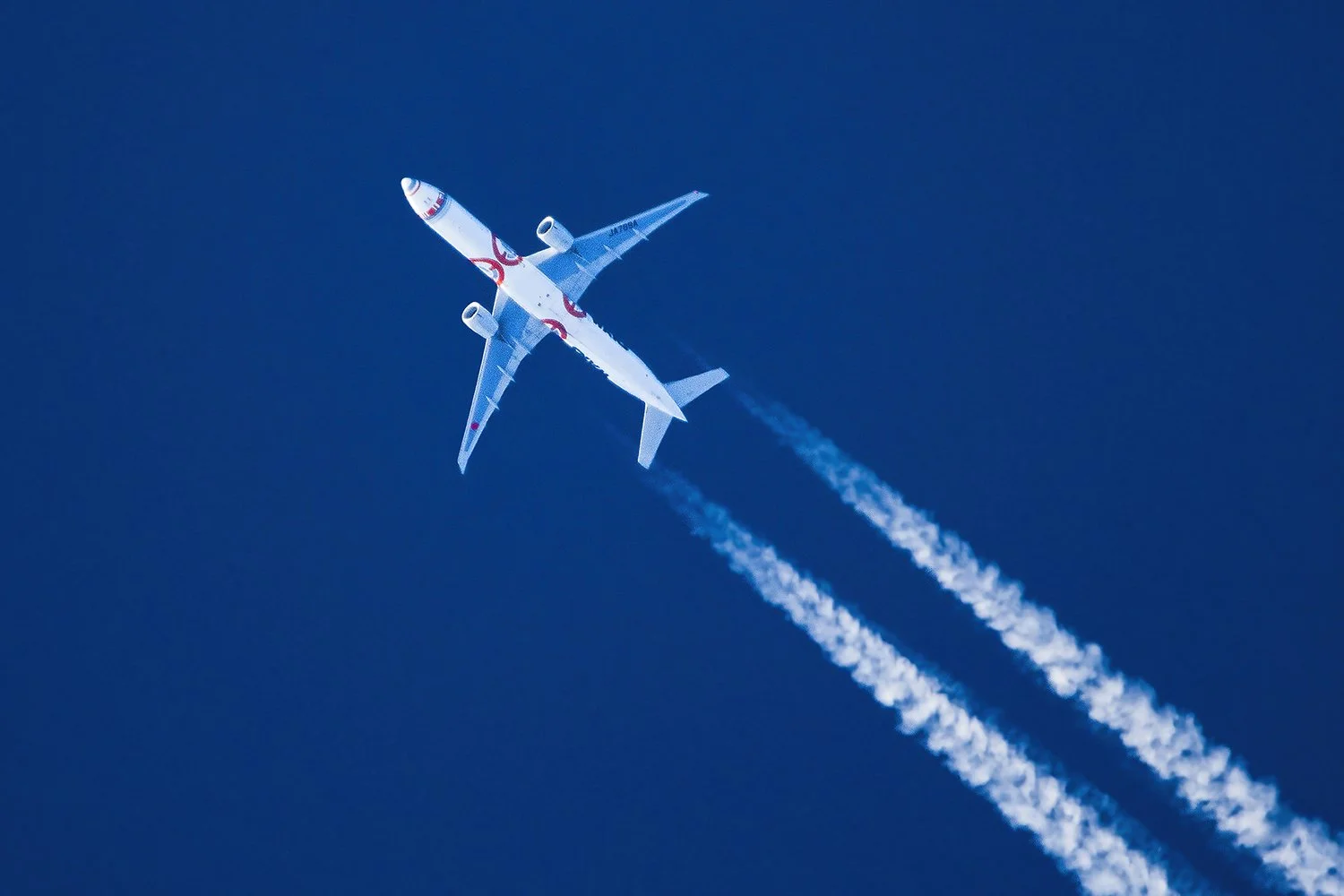
BOEING 777 - Flight: NH8548; All Nippon Airways (Star Wars BB-8 Livery); Tokyo to Chicago; Boeing 777-381 (ER); Registration: JA789A; AGL: 37,000 feet; Ground speed: 524 knots.
The contrails behind this Boeing 777-381ER are bright, persistent ice-crystal trails formed as engine exhaust moisture freezes in cold upper-atmosphere temperatures around −50 °C to −60 °C. Their dense, continuous appearance and gradual spreading indicate ice-supersaturated air, allowing the trails to remain visible and slowly diffuse into thin cirrus-like clouds.
Photographed from the Oak Bay Marina, Victoria, BC, Canada, 48.424° N, −123.303° W. August 25, 2021.
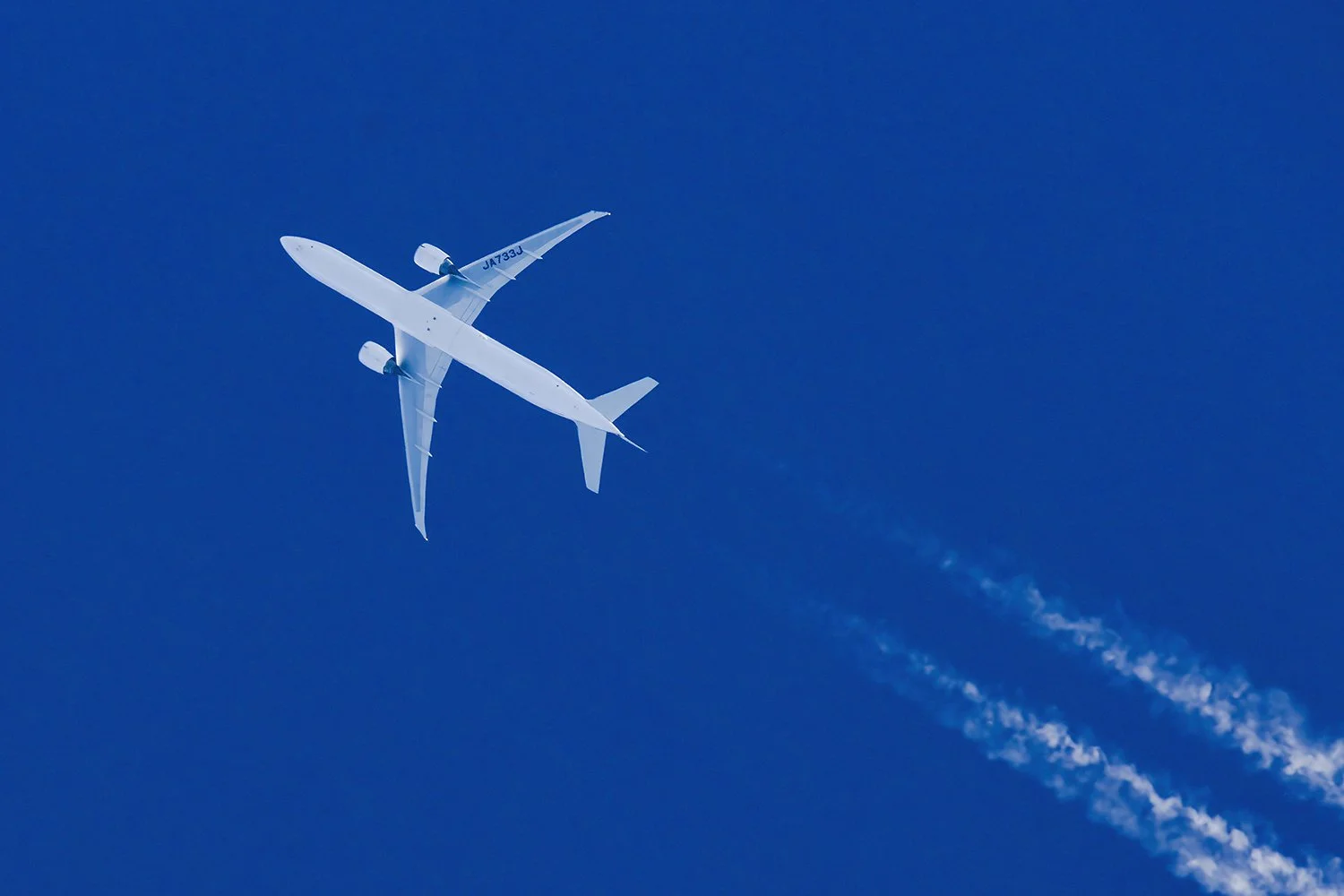
BOEING 777 – Flight: JL11; Japan Airlines; Dallas to Tokyo; Boeing 777-346(ER); Registration: JA733J; AGL: 32,000 feet; Ground speed: 498 knots.
These contrails are thin and partially dissipating, indicating marginal persistence as engine exhaust moisture freezes in temperatures around −40 °C to −50 °C. Their fragmented, fading appearance suggests lower humidity, causing the ice crystals to sublimate relatively quickly rather than forming long-lasting trails.
Photographed from the Oak Bay Marina, Victoria, BC, Canada, 48.424° N, −123.303° W. May 16, 2023.
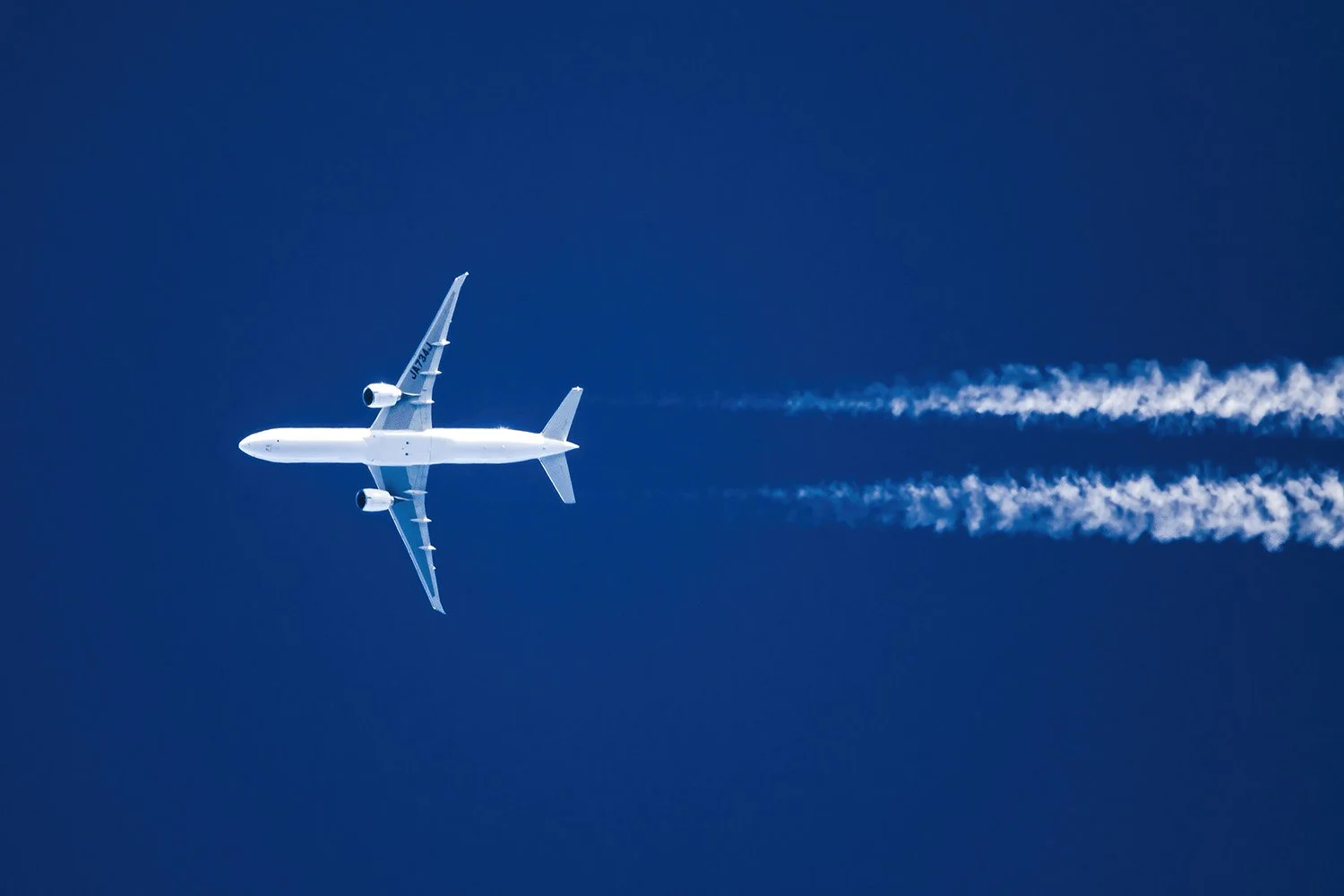
BOEING 777 – Flight: JL11; Japan Airlines; Dallas to Tokyo; Boeing 777-346(ER); Registration: JA734J; AGL: 32,000 feet; Ground speed: 469 knots.
The contrails are moderately persistent but beginning to dissipate, forming as engine exhaust moisture freezes in asembient temperatures around −40 °C to −50 °C. Their slightly broken, diffusing appearance suggests marginal humidity, allowing initial formation but causing gradual sublimation and thinning downstream.
Photographed from the Oak Bay Marina, Victoria, BC, Canada, 48.424° N, −123.303° W. November 24, 2023.
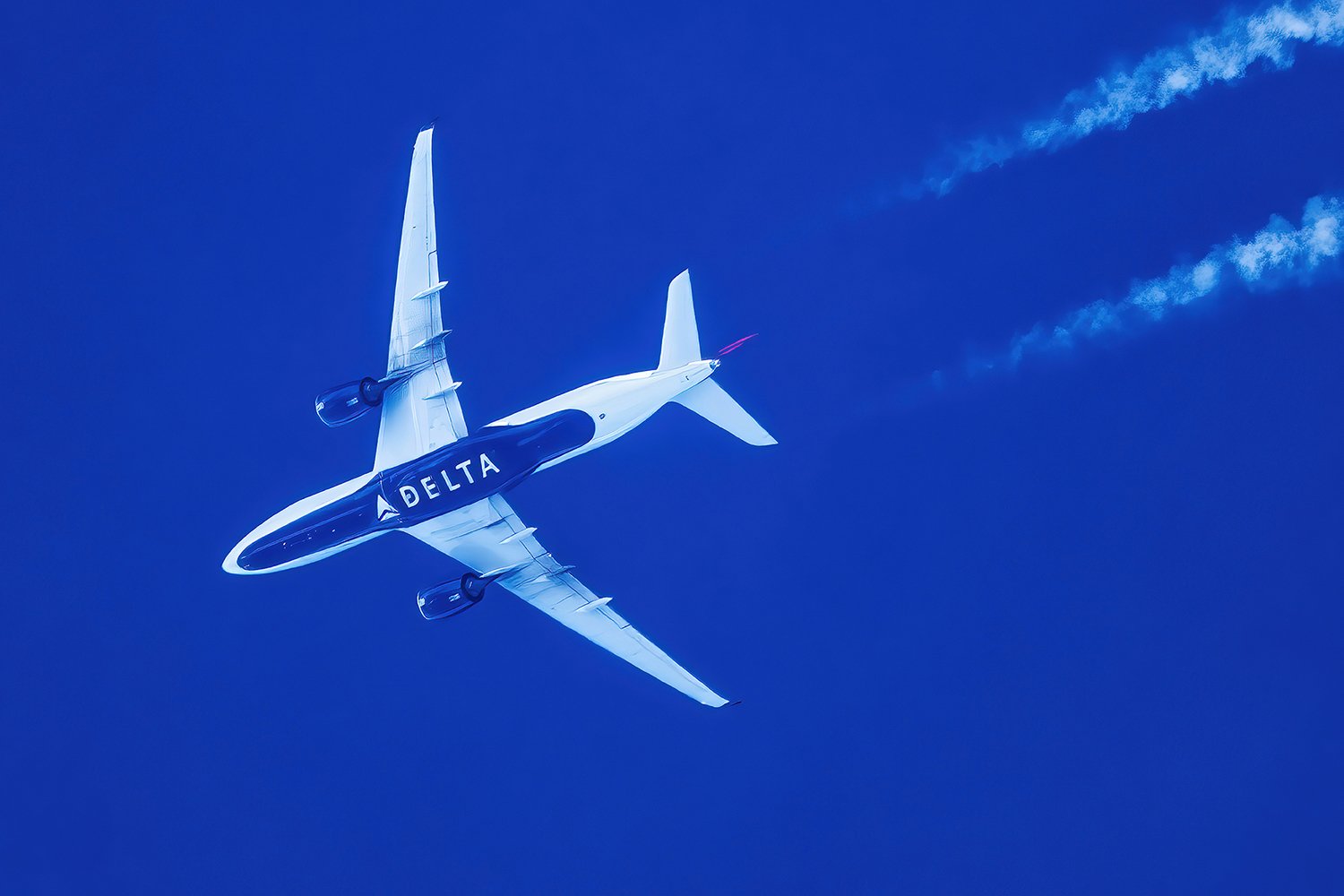
AIRBUS A350 – Flight: DL173; Delta Air Lines; Salt Lake City to Seoul; Airbus A350-941; Registration: N518DZ; AGL: 36,000 feet; Ground speed: 440 knots.
The contrails behind this Airbus A350 are thin and short-lived, forming as engine exhaust moisture freezes in ambient temperatures around −45 °C to −55 °C. Their faint, broken appearance indicates relatively dry air, causing the ice crystals to dissipate quickly rather than persist.
Photographed from the Oak Bay Marina, Victoria, BC, Canada, 48.424° N, −123.303° W. July 10, 2025.
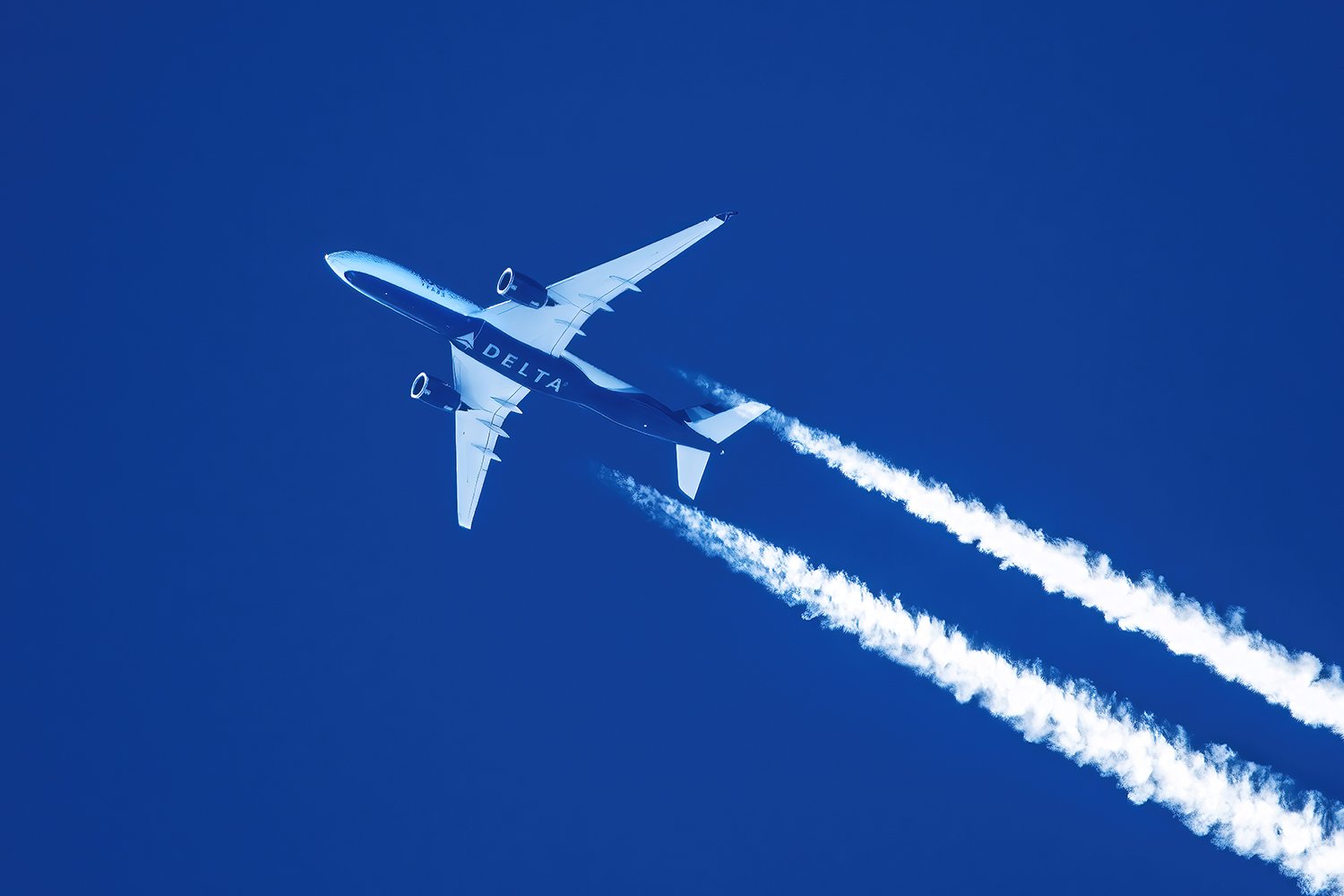
AIRBUS A350 – Flight: DL26; Delta Air Lines (100 Years Livery); Seoul to Atlanta; Airbus A350-941; Registration: N527DN; AGL: 39,000 feet; Ground speed: 530 knots.
The contrails behind this Airbus A350 at 39,000 feet are dense, persistent ice-crystal trails, formed as engine exhaust moisture freezes in very cold ambient temperatures around −55 °C to −65 °C. Their bright, continuous structure and gradual expansion indicate ice-supersaturated air, allowing the trails to remain well-defined and slowly spread into cirrus-like clouds.
Photographed from the Oak Bay Marina, Victoria, BC, Canada, 48.424° N, −123.303° W. July 10, 2025.
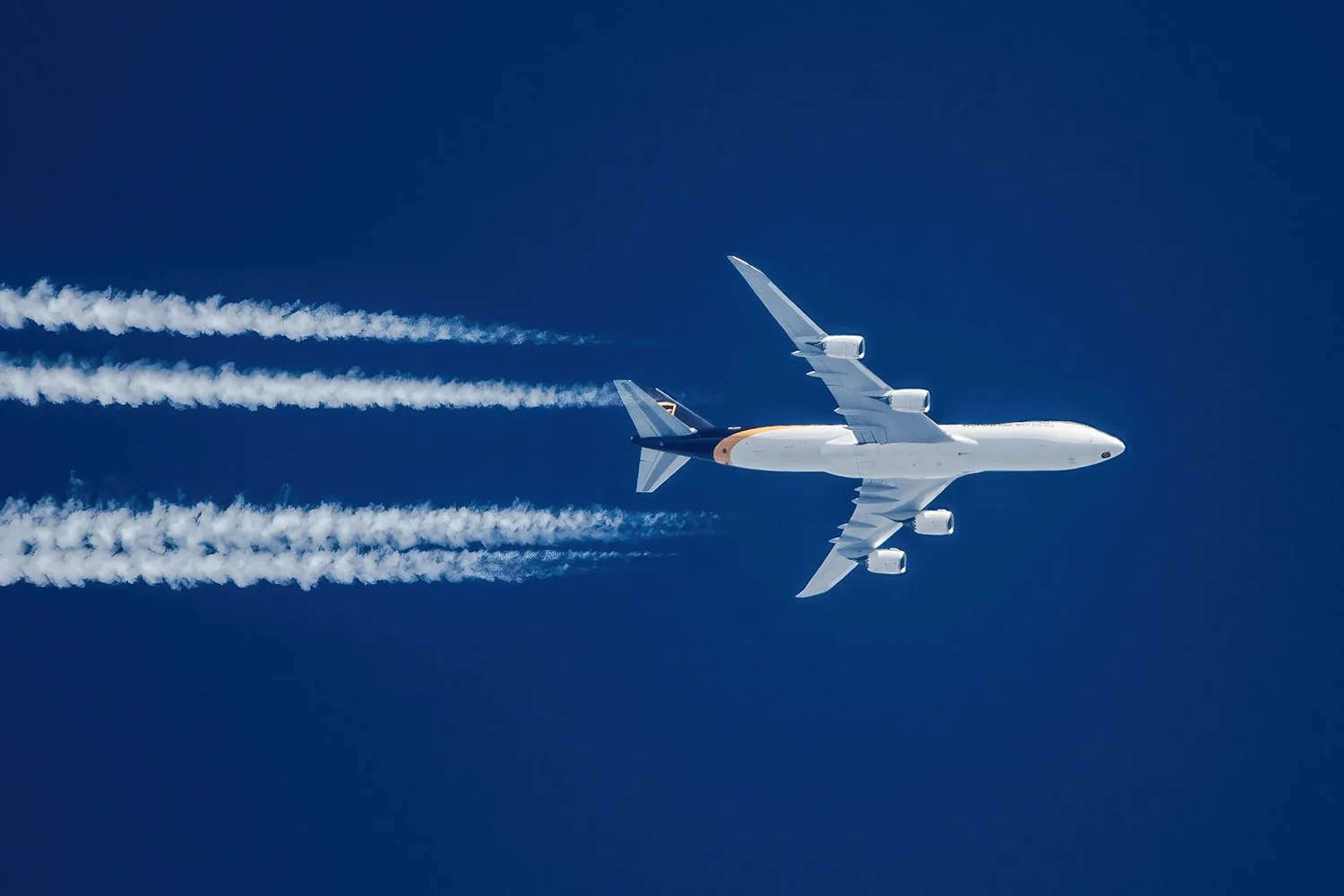
BOEING 747 – Flight: 5X67; UPS; Anchorage to Louisville; Boeing 747-8F; Registration: N628UP; AGL: 31,000 feet; Ground speed: 542 knots.
The contrails behind this Boeing 747 at 31,000 feet are moderately persistent ice-crystal trails, formed as engine exhaust moisture freezes in ambient temperatures around −35 °C to −45 °C. Their slightly uneven, gradually spreading appearance suggests near ice-supersaturated conditions, allowing partial persistence while slowly diffusing under atmospheric mixing.
Photographed from the Oak Bay Marina, Victoria, BC, Canada, 48.424° N, −123.303° W. May 20, 2025.
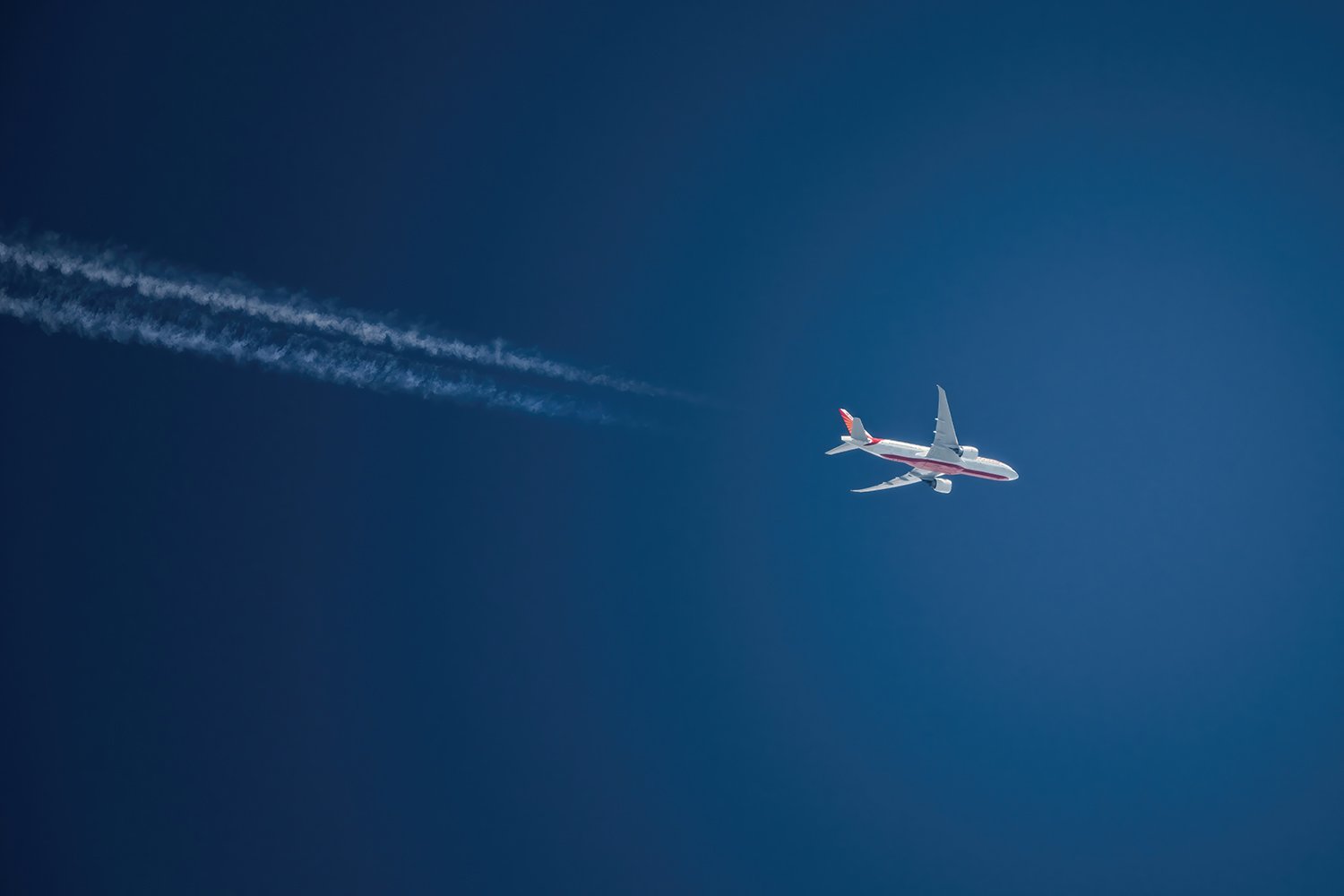
BOEING 777 – Flight: AI174; Air India; San Francisco to Delhi; Boeing 777-232(LR); Registration: VT-AEG; AGL: 30,000 feet; Ground speed: 544 knots.
The contrails from this Boeing 777 at 30,000 feet are thin and short-lived, forming as engine exhaust moisture freezes in ambient temperatures around −30 °C to −40 °C. Their faint, rapidly dissipating appearance indicates relatively dry air, causing the ice crystals to sublimate quickly rather than persist.
Photographed from the Oak Bay Marina, Victoria, BC, Canada, 48.424° N, −123.303° W. May 8, 2025.
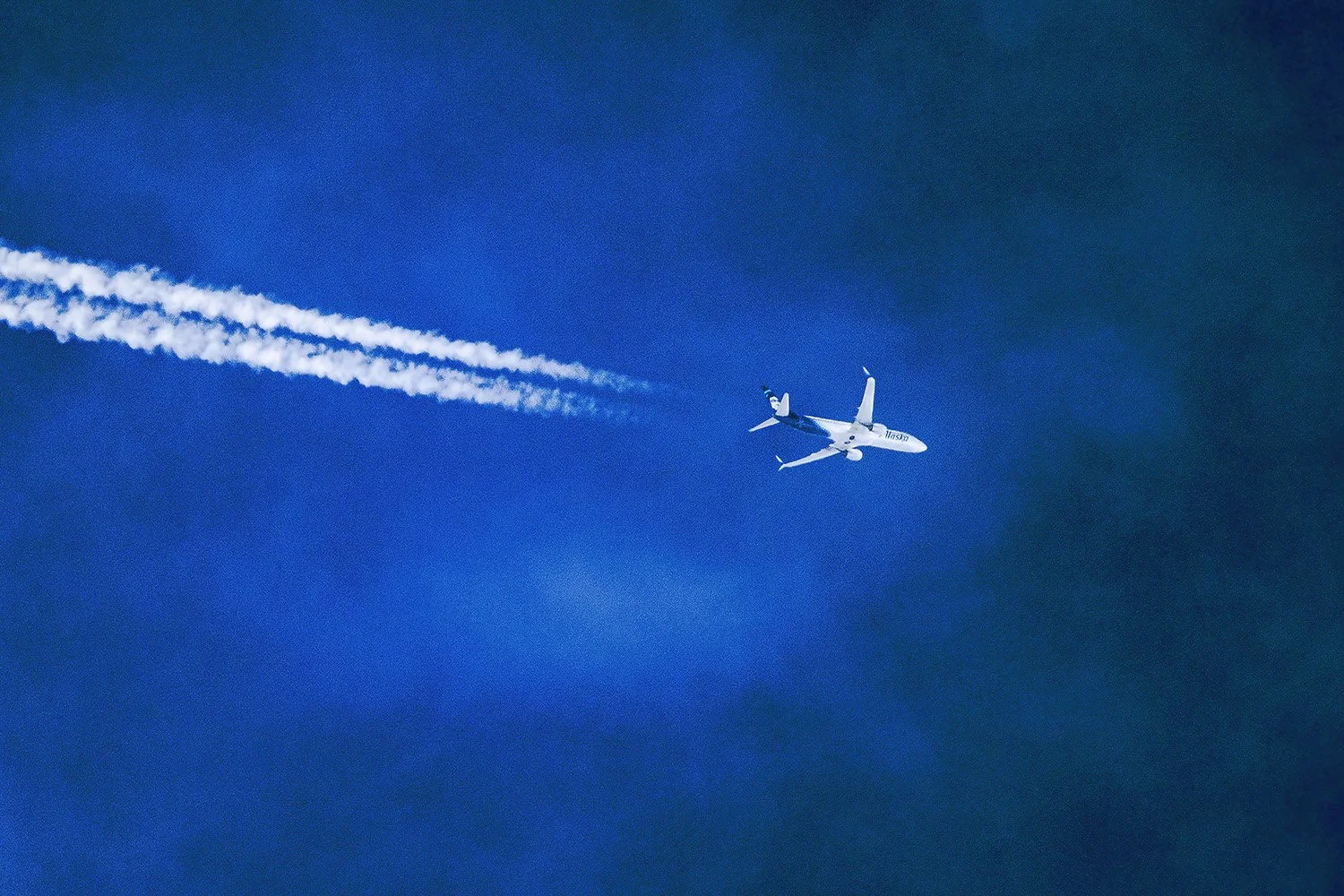
BOEING 737 – Flight: ASA106; Alaska Airlines; Seattle to Fairbanks; Boeing 737-990(ER); Registration: N442S; AGL: 34,000 feet; Ground speed: 360 knots.
The contrails behind this Boeing 737 at 34,000 feet are well-defined and moderately persistent, forming as engine exhaust moisture freezes in ambient temperatures around −45 °C to −55 °C. Their bright, slightly spreading appearance suggests near ice-supersaturated conditions, allowing the trails to linger while gradually diffusing into the surrounding air.
Photographed from the Oak Bay Marina, Victoria, BC, Canada, 48.424° N, −123.303° W. April 9, 2024.

Boeing 777 – Flight: NH160; All Nippon Airways; Tokyo to New York; Boeing 777-300(ER); Registration: JA798A; AGL 33,000 feet; Ground speed: 534 knots.
At 33,000 feet, the Boeing 777’s engines are producing persistent contrails as hot, moist exhaust rapidly condenses and freezes in the cold upper troposphere. Given the altitude and likely ambient humidity, these trails appear dense and well-defined, indicating atmospheric conditions favorable for long-lived contrail formation.
Photographed from the Oak Bay Marina, Victoria, BC, Canada, 48.424° N, −123.303° W. April 21, 2025
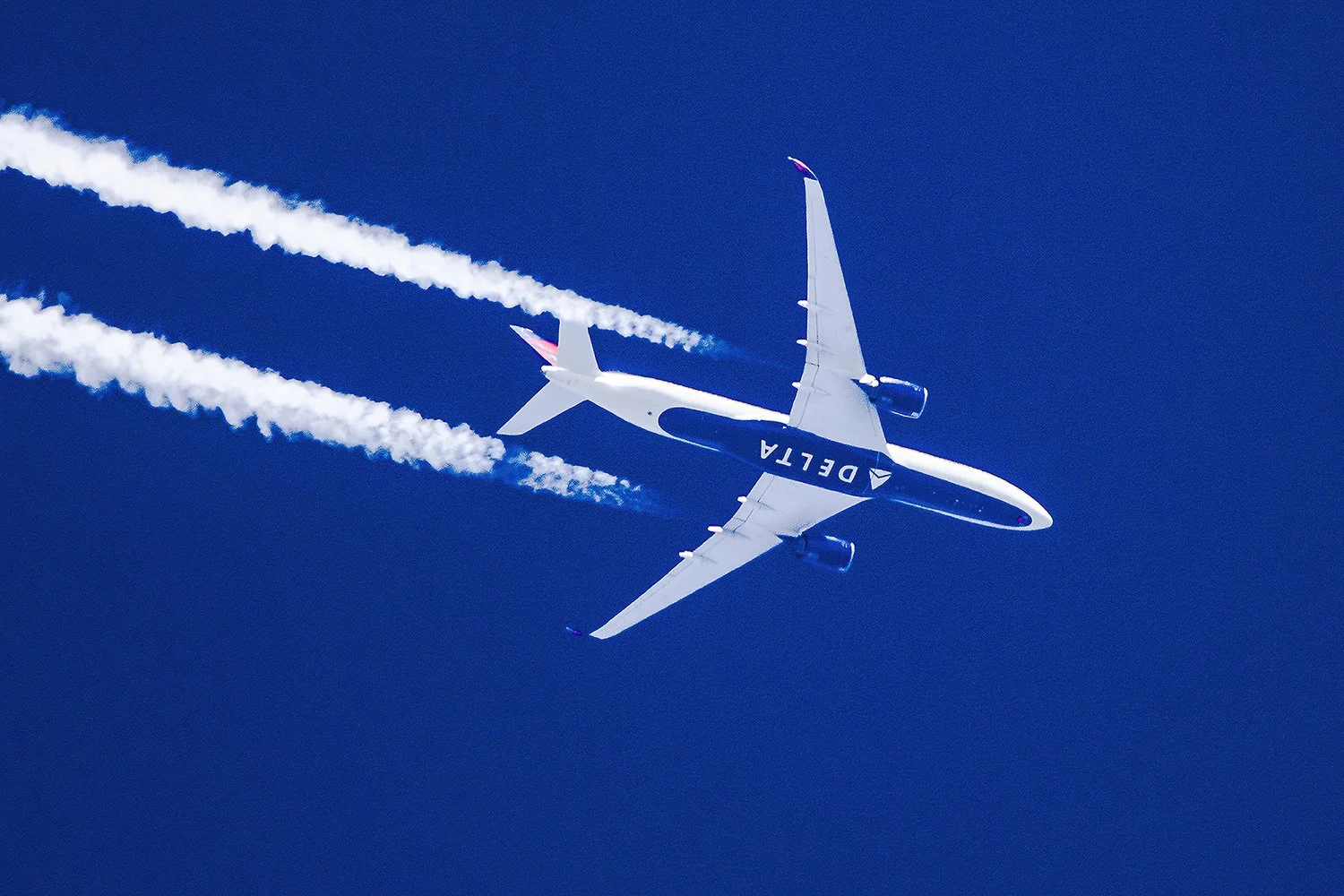
AIRBUS A350 – Flight: DAL170; Delta Air Lines; Seoul to Minneapolis; Airbus A350-941; Registration: 508DN; AGL: 37,000 feet; Ground speed: 568 knots.
At 37,000 feet, the A350’s engines are generating thick, continuous contrails as exhaust moisture rapidly freezes in the extremely cold upper atmosphere. Their uniform, persistent appearance suggests the aircraft is cruising through a region of high relative humidity with respect to ice, allowing the trails to remain dense and well-defined.
Photographed from the Oak Bay Marina, Victoria, BC, Canada, 48.424° N, −123.303° W. April 9, 2024.

Boeing 747 – Flight: CX97; Cathay Cargo (80th Anniversary Livery); Guadalajara to Anchorage; Boeing 747-867F; Registration: B-LJE; AGL 40,000 feet; Ground speed: 455 knots.
The four-engine Boeing 747 is producing persistent condensation trails as hot, moisture-rich exhaust gases mix with the extremely cold, low-pressure air at 40,000 feet. The uneven density and slight waviness in the contrails show the influence of upper-atmosphere winds and turbulence gradually dispersing the ice crystals behind the aircraft.
Photographed from the Oak Bay Marina, Victoria, BC, Canada, 48.424° N, −123.303° W. April 27, 2026.
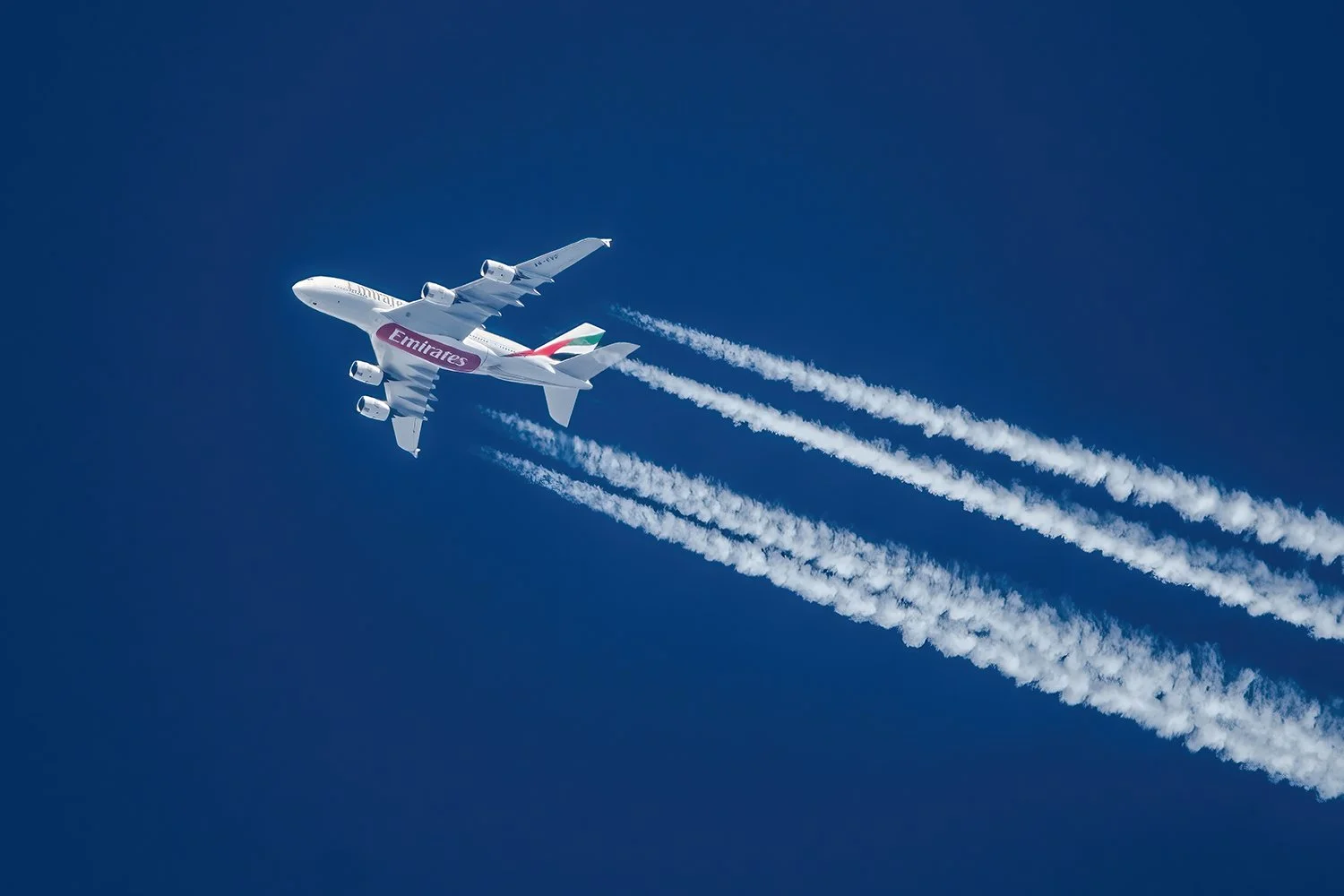
Airbus A380 – Flight: EK225; Emirates; Dubai to San Francisco; Airbus A380-842; Registration: A6-EVD; AGL: 39,000 feet; Grounds speed: 485 knots.
The Airbus A380’s four engines are producing long, dense contrails as water vapor in the exhaust rapidly freezes into ice crystals in the frigid upper atmosphere at 39,000 feet. The textured, turbulent appearance of the trails reflects variations in humidity and wind shear, causing the contrails to expand and slowly diffuse behind the aircraft.
Photographed from the Oak Bay Marina, Victoria, BC, Canada, 48.424° N, −123.303° W. July 10, 2025.
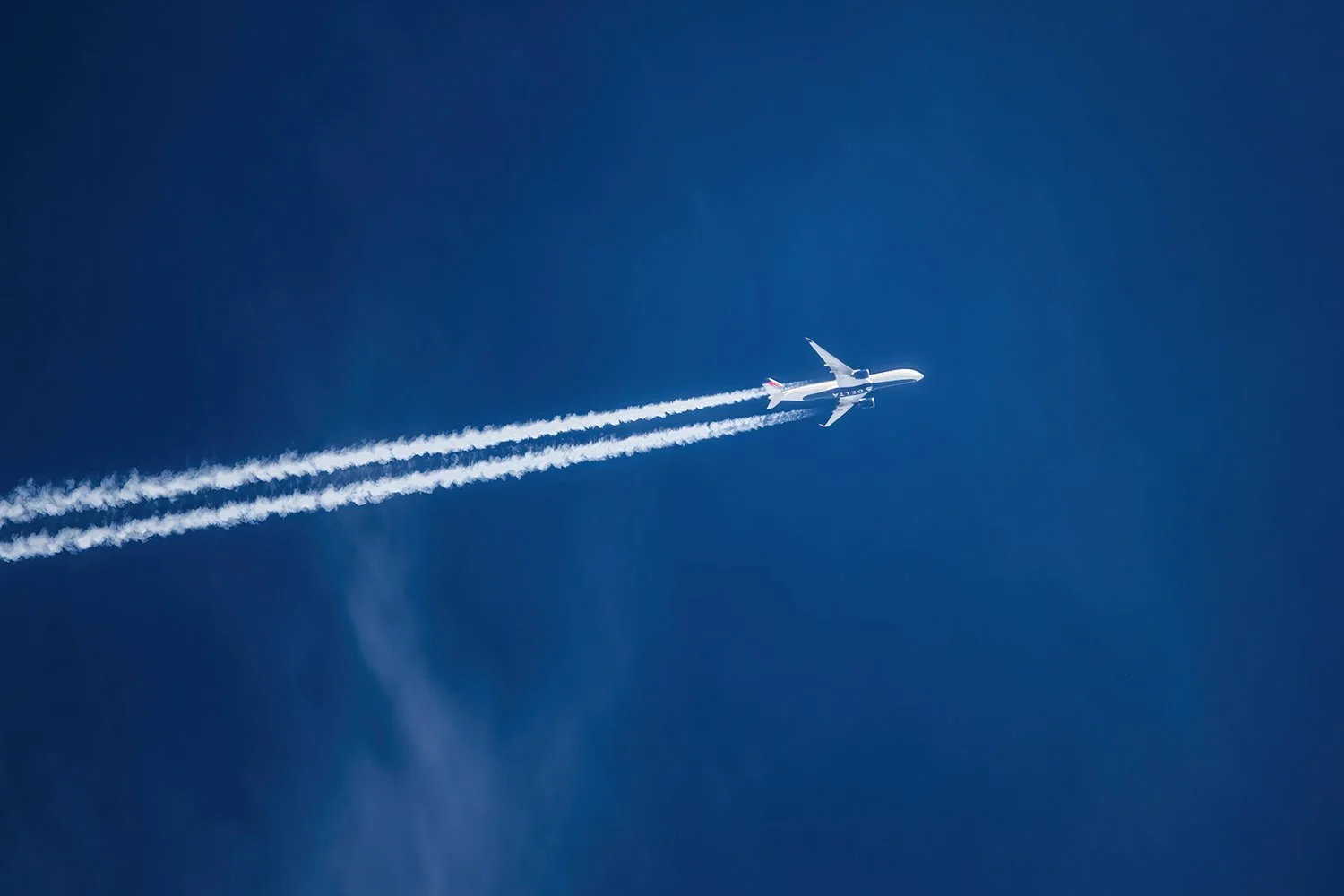
Airbus A350 – Flight: DL170; Delta Air Lines; Seoul to Minneapolis; Airbus A350-941; Registration: N511DN; Altitude: 40,000 feet; Ground speed: 514 knots.
The Airbus A350’s twin engines are generating bright, persistent contrails as supercooled moisture in the exhaust condenses and freezes into ice crystals in the extremely cold air at 40,000 feet. The relatively smooth, parallel trails indicate stable upper-atmospheric conditions, while subtle feathering along the edges reveals the influence of high-altitude winds gradually dispersing the ice particles. Wispy cirrus clouds lingering in the background highlight the moist upper-atmospheric conditions that allow the contrails to remain visible and slowly spread behind the aircraft.
Photographed from the Oak Bay Marina, Victoria, BC, Canada, 48.424° N, −123.303° W. July 8, 2025.
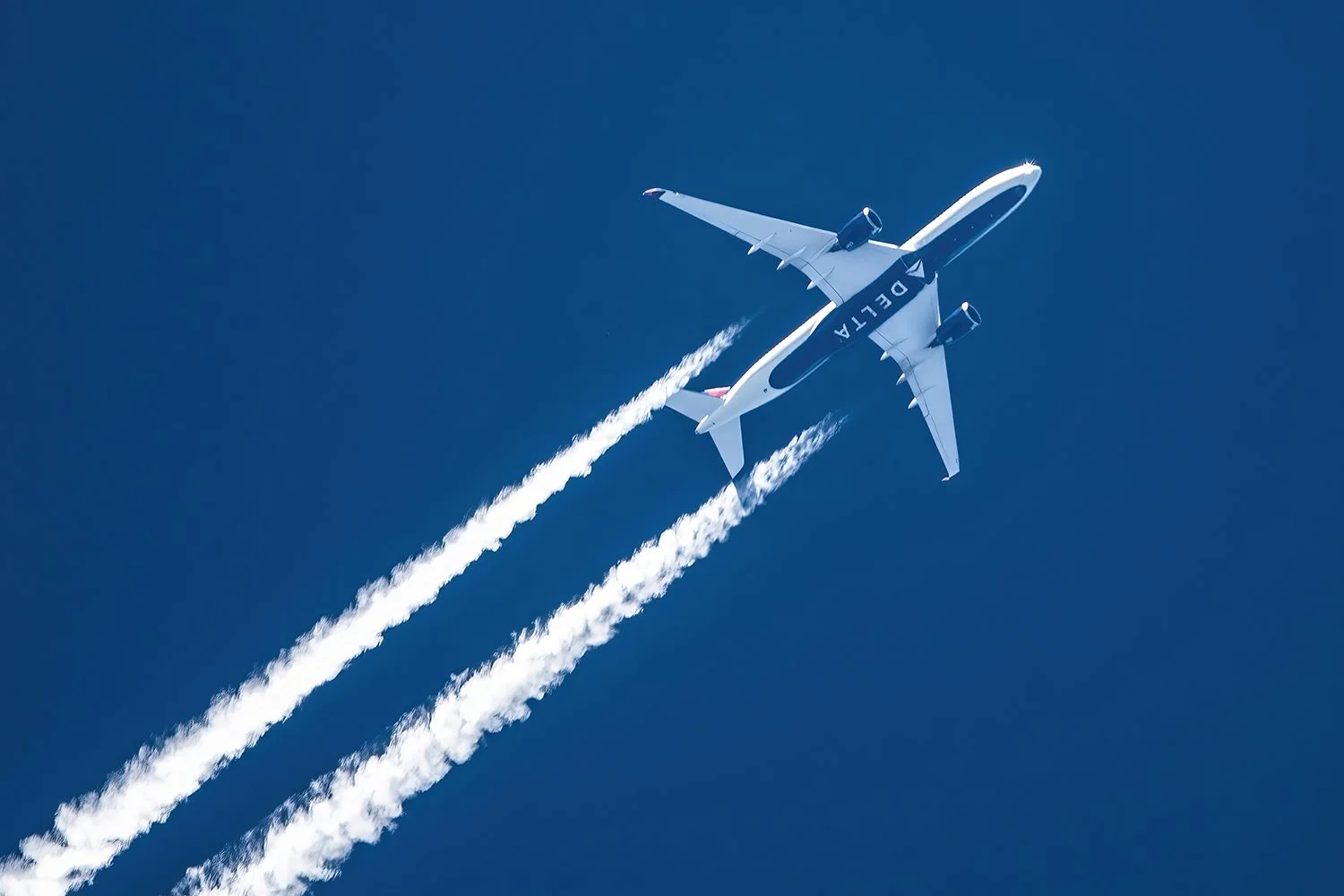
Airbus A350 – Flight: DL26; Delta Air Lines; Seoul to Atlanta; Airbus A350-941; Registration: N525DN; Altitude: 39,000 feet; Ground speed 516 knots.
The aircraft is leaving two dense, well-defined contrails as its engines inject warm, moisture-laden exhaust into the frigid air at 39,000 feet, where it rapidly freezes into ice crystals. The bright, textured trails remain sharply visible against the dark blue sky, while subtle turbulence causes the contrails to ripple and broaden as they drift behind the aircraft.
Photographed from the Oak Bay Marina, Victoria, BC, Canada, 48.424° N, −123.303° W. July 7, 2025.

Boeing 777 – Flight: PR118; Philippine Airlines; Manila to Toronto; Boeing 777-3F6(ER); Registration: RP-C7782; Altitude: 35,000 feet; Ground speed 542 knots.
The Boeing 777 is producing two bright, persistent contrails as moisture from its high-bypass turbofan engines freezes instantly into ice crystals in the cold, humid air at 35,000 feet. The slightly uneven, billowing texture of the trails suggests mild atmospheric turbulence and varying humidity levels, causing the contrails to expand and diffuse as the aircraft cruises toward Toronto.
Photographed from the Oak Bay Marina, Victoria, BC, Canada, 48.424° N, −123.303° W. May 14, 2025.

Boeing 777 – Flight: KE85; Korean Air; Seoul to New York; Boeing 777-300(ER); Registration: HL8347; Altitude: 35,000 feet; Ground speed: 508 knots.
The Boeing 777 leaves two bright, sharply defined contrails that cut across the sky as engine exhaust moisture freezes instantly into ice crystals at 35,000 feet. Wispy cirrus clouds surrounding the aircraft reveal a humid upper atmosphere, helping the contrails remain persistent while subtle wind currents begin to feather and diffuse their edges.
Photographed from the Oak Bay Marina, Victoria, BC, Canada, 48.424° N, −123.303° W. May 14, 2025